
You hit the opener button, and the door hesitates halfway up with a grinding sound before it finally clears the frame. Or maybe it closes a little crooked, catching on one side of the track. After a long stretch of afternoon downpours and thick humidity, this is the moment a lot of homeowners first notice something's off — and it's usually a sign the door has been quietly taking a beating for months.
Garage doors in this part of Florida deal with a rough combination: swelling wood and weatherstripping from moisture, rust creeping into hardware, grit washed into the tracks by storms, and hardware that loosens from wind load during gusty weather. None of that fixes itself. The good news is that a simple seasonal routine, done right after hurricane season winds down, can catch most of it before it turns into a stuck door or a service call.
What You'll Need
- Work gloves
- Flashlight
- Stepladder
- Socket wrench or adjustable wrench
- Silicone-based garage door lubricant (not WD-40 or grease — both attract grit in humid air)
- Soft cloth or rag
- A 2x4 or similar block of wood
The 20-Minute Routine
- Walk the tracks with a flashlight. Look for rust spots, dents, debris, or standing moisture inside the metal track. After months of humidity and storm runoff, it's common to find a thin film of grime or early rust bloom, especially near the bottom where water pools.
- Check the bottom seal and weatherstripping. Press on the rubber seal along the bottom of the door and around the panel edges. If it feels spongy, cracked, or swollen, moisture has gotten into it. A swollen seal can bind in the track and make the door work harder than it should.
- Inspect rollers and hinges. Spin each roller by hand if you can reach it safely from the ladder. It should turn smoothly with no grinding or flat spots. Check hinges for rust streaks or visible wear at the pivot points.
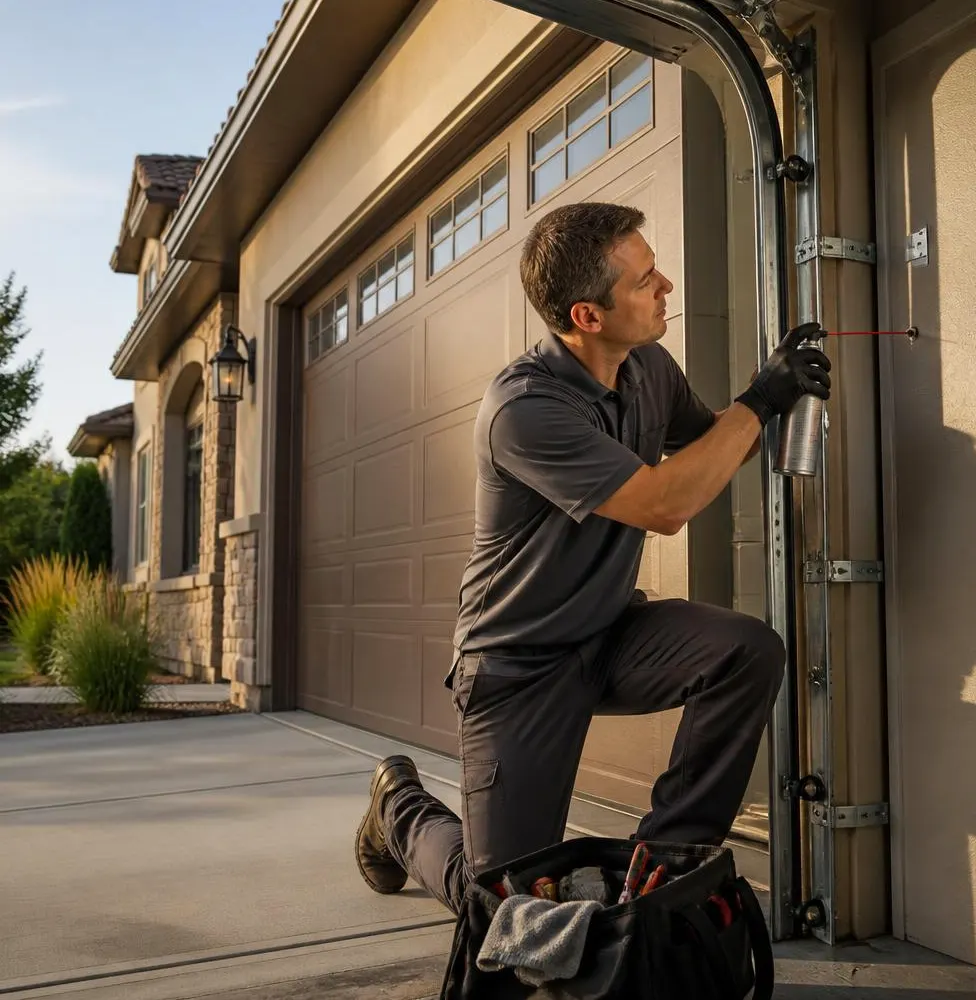
- Lubricate the moving parts. Apply a light coat of silicone-based lubricant to the rollers, hinges, and the track itself. Wipe off any excess with the cloth. Skip the springs and cables entirely — those are not a DIY lubrication job.
- Test the balance. With the door closed, pull the manual release cord to disconnect the opener. Lift the door by hand to about waist height and let go. A properly balanced door should stay put. If it drifts up or drops down on its own, the springs are compensating incorrectly for the door's weight.
- Test the auto-reverse safety feature. Reconnect the opener. Place the block of wood flat on the ground where the door would close. Run the door down — it should touch the wood and reverse immediately. If it doesn't, stop using the opener until this is fixed.
- Tighten visible hardware. Using the wrench, check the bolts on the track brackets and the hinges. Wind load from storm season can work bolts loose over several months, even if nothing looks obviously wrong.
- Look over the panels themselves. Run your hand along the lower panels for soft spots, bubbling paint, or rust freckles, which often show up first where rain has been driven against the door by wind.
What's Safe for a Homeowner vs. What Needs a Technician
Everything above — visual inspection, lubrication, tightening visible bolts, and testing balance or auto-reverse — is well within reach for most homeowners with basic tools and twenty minutes to spare.
What's not a DIY job: anything involving the torsion or extension springs, the lift cables, or a door that's come off its track. These components are under heavy tension and store enough energy to cause a serious injury if handled without the right equipment. The same goes for a door that fails the balance test (drifting instead of holding position) or fails the auto-reverse test — both point to adjustments that need a trained eye.
When to Call Center Hill Garage Door Service
If your seasonal check turns up a sagging or unbalanced door, rusted cables, or a spring that looks stretched, frayed, or visibly gapped, that's the point to call in a technician rather than keep adjusting things yourself. Our Garage Door Maintenance & Tune-Up service covers a full inspection of springs, cables, rollers, and hardware, with adjustments made to account for the wear that comes with humid, storm-heavy weather. If the issue is further along — a snapped spring, a frayed cable, or a door that's genuinely off track — our Garage Door Spring Repair and Off Track Door Repair services get it back to proper working order and rechecked for wind-load performance before we leave.
A twenty-minute check twice a year is cheap insurance against a garage door that fails at the worst possible time. If your routine check turns up something beyond lubrication and a few bolts, give Center Hill Garage Door Service a call. We serve Center Hill, Webster, Bushnell, Wildwood, Coleman, Sumterville, Lake Panasoffkee, and Mascotte, and we'll have a technician out to get it sorted properly.