
What Another Season of Ignoring This Actually Costs
A garage door with a worn lock, a gap at the seal, or an outdated opener can be defeated in under 30 seconds using nothing more than a wire coat hanger or a $20 signal-grabbing device bought online. Most homeowners think of their garage door as a parking spot cover, not a home entry point — but it's usually the weakest point in the whole house, and it's often wired directly into the interior through an unlocked side door. Put off the fixes below for another season and you're not just risking a stolen bike or lawn equipment. You're risking a direct, unseen path into the house itself.
How Burglars Actually Get In
- The coat hanger trick: A wire or hook is slid through a gap at the top corner of the door to snag the emergency release cord, popping the door open for manual lifting. This works best on doors where the weatherstripping has shrunk or warped from heat and humidity, leaving a visible gap instead of a tight seal.
- Prying the bottom corner: A crowbar or flat bar forces the bottom of the door up just enough to trip the release. This is far easier on doors where the bottom brackets or rollers have rusted or weakened from moisture exposure, since the hardware no longer resists force the way it should.
- Code grabbing: Older openers that broadcast a fixed code every time can be captured by a cheap signal-cloning device and replayed later, no coat hanger needed. If your opener is more than a decade old, this is a real risk, not a rare one.
- The unlocked side door: Most garages have a pedestrian door that people simply never think to lock, because the big door feels like the real barrier. It isn't.
- Grabbing the opener itself: A garage remote clipped to a visor or sitting in an unlocked car in the driveway is an open invitation — no tools or tricks required.
- Catching the door open: A door left up during yard work, unloading groceries, or storm prep for even a few minutes is an opportunity most burglars will take if they're already walking the block.
How Badly It Goes Wrong
The real damage isn't the garage contents. Once someone is inside, the interior door to the house is usually unlocked, because homeowners assume the garage door itself is the security layer. That means a burglar who gets past the garage door often has quiet, unseen access to the entire home — no broken window, no forced front door, no neighbor noticing anything. Tools stored in the garage, like ladders or pry bars, can even be used to get further into the house.
Habits That Shut the Door on Easy Break-Ins
- Lock the interior door between the garage and house every time, the same way you'd lock an exterior door.
- Never leave the opener in a parked car. Bring it inside or switch to a keychain remote you keep on you.
- Cover or frost garage windows so vehicles, tools, and valuables aren't visible from outside.
- Use the vacation or lockout feature on your opener whenever you travel, including hurricane evacuations, so the door can't be triggered remotely while you're gone.
- Don't leave the door open unattended during yard work or loading, even for a few minutes.
- Check your weatherstripping and seals each season. Florida's humidity causes seals to swell and shrink, and a gap that forms from that swelling is exactly what the coat-hanger trick exploits.
Hardware Upgrades Worth the Investment
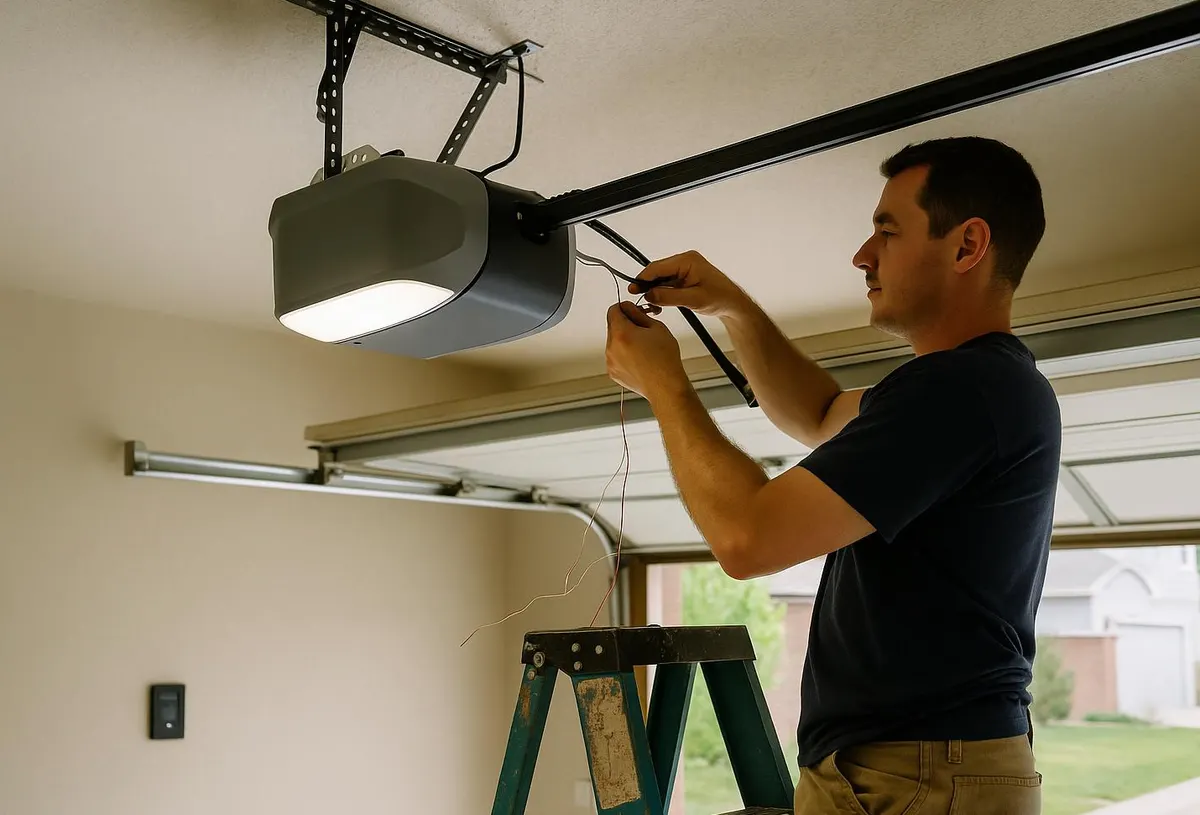
- Rolling-code openers change the signal every time the remote is used, making code-grabbing devices useless. If your current opener still uses a fixed code, this upgrade closes one of the easiest entry tricks outright.
- A smart opener with phone notifications lets you know the moment the door opens or closes, which matters most when you're away during storm season and can't physically check.
- Reinforced bottom brackets and heavier tracks resist prying far better than corroded or lightweight originals, especially important once rust has had a season or two to take hold.
- Motion-sensor lighting and a camera aimed at the driveway add a layer of deterrence that costs little and works around the clock.
Why This Matters More Here Than in Drier Climates
Center Hill's combination of heat, humidity, and storm season creates conditions that quietly work against your garage door's security. Seals swell and shrink with moisture, leaving gaps that didn't exist a year ago. Brackets, hinges, and locks exposed to salt air and persistent humidity corrode faster, weakening the hardware that's supposed to resist force. And during hurricane prep, doors get left open longer than usual, storm damage can bend tracks or dent panels, and the rush to board up windows means security checks get skipped. After any named storm or heavy wind event, it's worth inspecting the door for new gaps, bent tracks, or loose brackets before assuming the house is secure again.
When to Call Center Hill Garage Door Service
If your opener still uses an old fixed-code remote, it's time for a Garage Door Opener Installation with rolling-code technology and app alerts — a straightforward upgrade that eliminates the code-grabbing risk entirely. If you've noticed rust on the tracks or brackets, gaps around the weatherstripping, or the door feels looser than it used to, a Garage Door Maintenance & Tune-Up will catch the wear before it becomes an easy entry point, and address any Off Track Door Repair needs from storm season wear in the same visit.
If you're in Center Hill, Webster, Bushnell, Wildwood, Coleman, Sumterville, Lake Panasoffkee, or Mascotte and want your garage door checked before the next storm rolls through, call Center Hill Garage Door Service today for an honest inspection and a fair price.